What is Sand Blast?
Sandblasting is a method used to remove imperfections and clean various surfaces. In this article, we intend to provide you with complete information about this method. Stay with us until the end of the text.
A practical guide to working with sandblasting on different surfaces is also provided so that users can best use this process for different surfaces. In the following, the technical details of this device and the risks associated with it are reviewed, and solutions to prevent these risks are also discussed.
What is sandblasting?
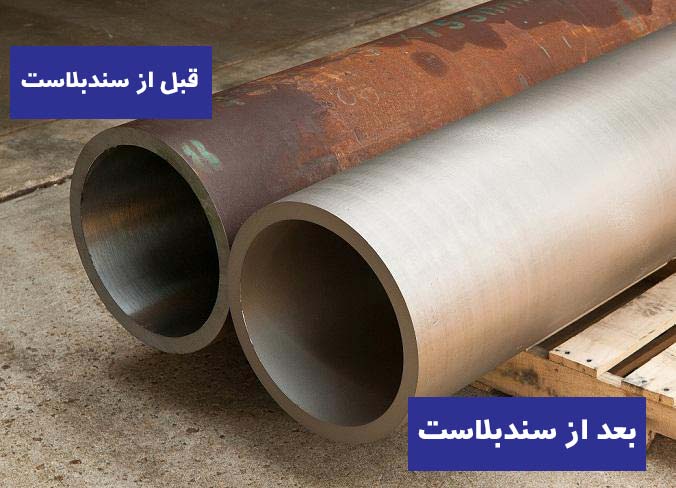
As we mentioned, one of the methods used to clean and remove irregularities on various surfaces such as metal, wood, glass, etc. is called sandblasting. Now the question that arises is what does sandblasting do? In this method, abrasive materials hit the surface at high speed and pressure, thereby removing contaminants, paint, dust, and excess materials on the surfaces and creating a clean and purified surface.
History of Sandblasting
General Benjamin Tillman is known as the inventor of the first sandblasting machine, whose invention eliminated the old method of cleaning and wiping surfaces, which was often very expensive and impossible, and replaced it with the sandblasting method, which is very efficient and cost-effective.
What are the types of abrasives or sandblasting materials?
An abrasive is a solid and hard material that has a peeling property due to its high hardness and is considered one of the main components of the sandblasting method. Abrasives are usually divided into two categories, metallic and non-metallic, according to the standards related to cleaning. The most important abrasives or sandblasting materials used include silica sand, garnet, coal slag, shot and grit, starolite, alumina and carbide. The characteristics of abrasives such as dimensions, density, hardness, recyclability, etc. have a direct impact on sandblasting performance and can cause quality differences.
What is a sandblasting machine?
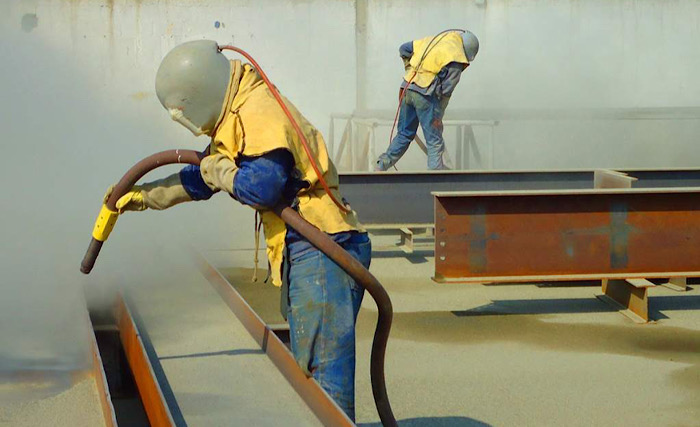
Depending on the type and volume of work, sandblasting equipment is divided into three categories: portable sandblasting, sandblasting cabin and sandblasting room. The most important of these equipments is the portable sandblaster which is used for spray cleaning on small and large surfaces and is very useful. The components of this equipment are: an air compressor which produces air, a diesel generator which supplies the energy required by the air compressor, a boiler in which the abrasive materials are stored and directed towards the hose, a hose which acts as an intermediary between the boiler and the nozzle and finally the nozzle which is the outlet of the abrasive at high pressure. The abrasives used in this method are usually non-metallic and in limited cases metallic types are used.

Types of Sandblasting
There are quite a few methods for performing this process, each of which is performed with a specific mechanism. Types of sandblasting methods include wet blasting or wet sandblasting, dry sandblasting, shot blasting and grit blasting using shot and broken shot, vacuum blasting or suction sandblasting, soda blasting using baking soda, bristle blasting, ice blasting, microblasting and bead blasting.
Sandblasting on different surfaces
This process can be applied to most surfaces such as glass, wood, metal stone, teeth, etc. Below, we will examine some of these cases.
1) Metal sandblasting
What is metal sandblasting? One of the main applications of sandblasting is sandblasting on metal. Metal surfaces are usually subject to corrosion, weathering and rusting, and in some cases the paint and coating of these surfaces are peeled off due to improper preparation. This method is suitable and efficient to solve these problems.
This feature is used to remove contamination and defects from various iron sections such as rebar and sheet metal, as well as parts such as bolts and nuts.
2) Glass sandblasting
What is glass sandblasting? It is a method used to produce frosted glass and design on glass (using a stencil). The degree of frosting of the glass in this process depends on the impact pressure and the type of sand. Among the applications of this method are the manufacture of doors, windows, glasses, etc.
3) Wood sandblasting
What is wood sandblasting? Wood surfaces are considered one of the best possible surfaces for cleaning, engraving and polishing due to their appropriate softness. This method is also very common in the furniture industry.
4) Dental Sandblasting
This method is used to remove dental plaque and usually uses baking soda as an abrasive.
Sandblasting Applications
The following are some of the applications of sandblasting:
Preparing surfaces for painting and various types of plating
Cleaning, removing contaminants, and matting surfaces
Derusting and sandblasting surfaces
Priming surfaces for glazing
Engraving and creating various patterns on wooden, glass, ceramic, etc. surfaces.
Creating roughness and protrusions for better adhesion of the final coating
Removing mold in the house
Also, various industries such as aerospace and defense, electronics, woodworking and furniture, chemical, jewelry, foundry, dyeing, rubber and food industries, etc. are among the jobs and industries in which sandblasting has many applications.
Advantages and disadvantages of the sandblasting method
Although innovations have been made in the sandblasting method today and new abrasives are used instead of old abrasives, in some cases old methods are still used along with toxic abrasives. In this section, we will examine the advantages and disadvantages of this method and provide explanations.
+) Advantages of the sandblasting method
Getting to know the advantages of the sandblasting method:
The sandblasting process is relatively fast and easy, but nevertheless, it requires a skilled workforce to comply with safety precautions.
Using this method for cleaning various surfaces has high results and quality.
It can be applied using only a compressor, a boiler and a nozzle and requires little equipment.
Due to the quality, high speed of work and the need for limited equipment, the cost of work is lower than traditional methods.
The sandblasting process has many applications and is used in various fields.
Most sandblasting abrasives are environmentally friendly and do not cause pollution if not recycled.
-) Disadvantages of sandblasting
Creating respiratory diseases in employees when using sand (especially silica), the need for proper ventilation due to high dust during work, and causing minor physical injuries due to the use of hard abrasives and their contact with the skin are among the disadvantages of sandblasting.
Sandblasting Implementation Tips
When implementing the sandblasting method, in order to prevent possible risks to employees and people present in the area, it is essential to observe certain safety tips and requirements such as preparing the implementation environment, checking the equipment and being careful in selecting materials, providing protective coverings, and cleaning the environment. We will explain each of these points below.
1- Preparing the implementation environment
Before starting work, the risks of falling equipment or employees getting their feet stuck in them must be found and eliminated. The operation of the ventilation system, air compressors, power supply, and washing devices must also be checked and their accuracy must be ensured.
2- Checking equipment and careful selection of materials
All equipment must be stored in a suitable container and inspected for cracks or damage. There should be no seams on the nozzle. Abrasive materials must be carefully selected to improve the quality of work. There should be no waste materials among these particles, and they should be selected as uniformly as possible in size and shape. Maintaining a safe distance from the machine is also very important and improves the quality of work.
3- Providing protective clothing
All employees must wear appropriate protective clothing such as thick overalls, work gloves, hats, safety glasses and earplugs, and it is also necessary to have respiratory equipment in case of lung damage.
4- Cleaning the environment
Placing a plastic cover on the floor of the environment to collect particles helps a lot in making the work easier when cleaning and clearing the work. After the work is completed, the environment should be thoroughly cleaned and cleaned with water and suction filtration systems.
Sandblasting price
The price of sandblasting is usually calculated on an hourly basis and depends on various factors such as the area and working conditions, the type of sandblasting and abrasive used, the sandblasting machine and similar items, and is determined according to these factors.
Conclusion
This article aims to introduce you to sandblasting and provide you with a detailed explanation of the process.